Cart
0






Not all rolling papers burn the same. Some race to the finish. Others deliver a slow, steady, flavorful session. The real difference often comes down to one technical factor most people overlook — paper porosity.
If you're browsing premium rolling papers online, understanding porosity can completely change how you choose your next pack.
Paper porosity refers to how much air can pass through the paper. In technical terms, it is measured by air permeability tests that determine how easily oxygen moves through microscopic pores in the sheet.
More porous paper allows more airflow into the burning zone. Less porous paper restricts oxygen. That simple difference dramatically changes burn speed, temperature, and overall experience.
This is especially important whether you're using classic cigarette rolling paper or ultra-thin variants like thins rolling papers.
Combustion requires oxygen. When a paper has higher porosity, extra oxygen feeds the ember continuously. This leads to:
Faster burn speed
Higher ember temperature
Shorter session duration
Lower porosity reduces oxygen diffusion. This results in:
Slower burn
More controlled ash formation
Longer lasting experience
Better flavor preservation
If you're pairing your paper with premium rolling tobacco, a slower burn often enhances flavor complexity.
Many people confuse thin paper with slow burn. Thickness and porosity are related but not identical.
Ultra-thin papers reduce paper taste, but if engineered with high porosity, they can still burn quickly. Premium manufacturers balance fiber density and air permeability to achieve a smooth, even burn without overheating.
This is why sourcing from a reliable rolling paper manufacturer in India matters when consistency is important.
Rolling papers are typically made from wood pulp, hemp, rice, or flax fibers. The internal fiber network determines pore size distribution.
Calcium carbonate and other natural fillers are often added. These influence:
Paper opacity
Burn line stability
Ash color
Combustion consistency
Smaller particle fillers can create a more uniform microstructure, leading to a predictable slow burn.
Uneven burn, often called canoeing, usually occurs when oxygen distribution is inconsistent across the paper surface. Proper porosity engineering prevents one side from burning faster than the other.
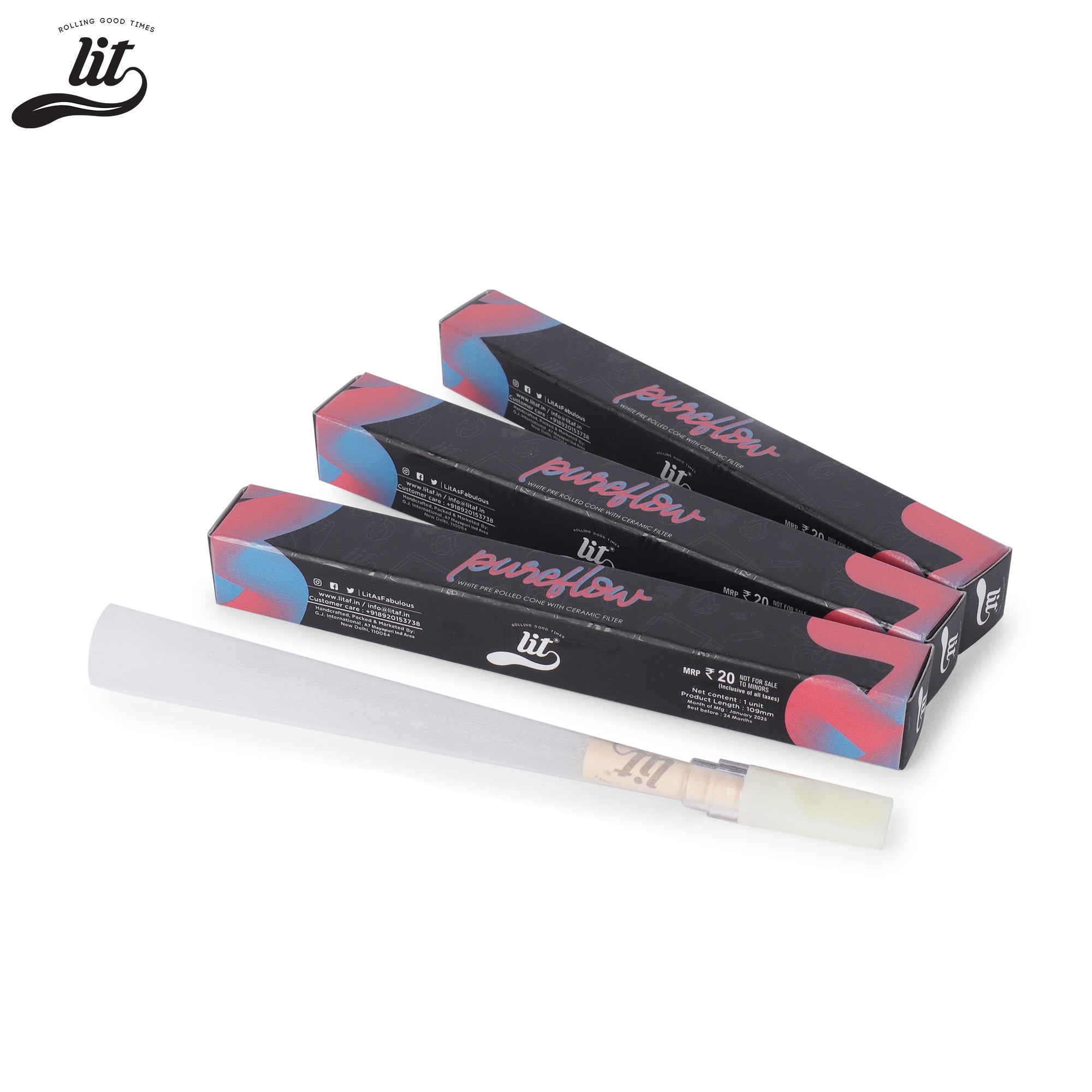
This is especially noticeable in pre roll cones, where uniform airflow ensures structural stability from start to finish.
When a paper burns too hot due to high airflow, it can overpower subtle flavor notes. Slower combustion allows terpenes and flavor compounds to express more naturally.
That’s why experienced users often prefer low-porosity hemp or rice papers for a smoother draw.
Explore specialized options like ganja rolling papers or premium OCB rolling papers to compare burn characteristics.
In industrial settings, porosity is measured using air permeability testing systems. One common unit used globally is the CORESTA unit, which quantifies how much air flows through a defined paper area under controlled pressure.
Higher CORESTA values indicate more airflow. Lower values indicate tighter fiber bonding and slower oxygen diffusion.
If your goal is a longer, smoother session, look for:
Low to medium porosity
Ultra-thin natural fiber composition
Minimal chemical additives
Even gum application
Pairing quality paper with properly prepared material and correct rolling technique ensures optimal combustion performance.
Paper design is far more scientific than it appears. Fiber density, filler composition, airflow resistance, and thickness all interact to shape burn speed and flavor delivery.
The next time you shop for rolling papers, consider not just size or brand, but porosity. A slower burn is not accidental. It is engineered.